


Bacteriostatic water, explained
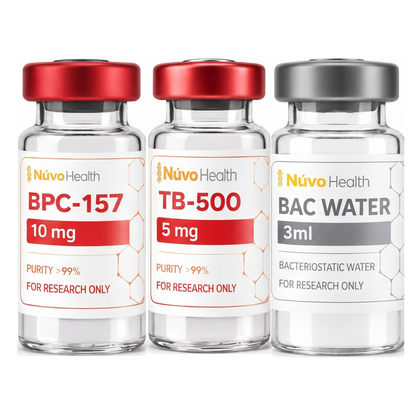
Bacteriostatic water is one of the most common solvents used to reconstitute lyophilised compounds in the laboratory. Understanding what it is — and how it differs from the alternatives — helps ensure samples are prepared consistently.
What it is
Bacteriostatic water is sterile water containing a small amount (typically 0.9%) of benzyl alcohol. The benzyl alcohol is bacteriostatic — it inhibits the growth of bacteria — which is what distinguishes it from plain sterile water.
Why the benzyl alcohol matters
Plain sterile water for a single procedure is intended to be used once and discarded. Because bacteriostatic water suppresses microbial growth, a reconstituted sample stored in it can remain usable across a working period rather than a single point in time, which is useful when a batch of material is worked with over several sessions.
When other solvents are used
- Sterile / distilled water — used where an additive-free solvent is required.
- Dilute acetic acid — some peptides are poorly soluble in water alone and dissolve more readily in a mildly acidic solution.
The appropriate solvent depends on the chemistry of the specific compound; solubility guidance is often noted in a compound's documentation.
Handling and storage
- Keep the solvent sterile — wipe the stopper before drawing from it and avoid touching the tip.
- Once a lyophilised sample is reconstituted, refrigerate it and protect it from light.
- Label reconstituted vials clearly with contents and date.
For laboratory and research use only. Not for human or animal consumption. Nūvo Health does not provide dosage, administration, or clinical guidance.