
KPV, BPC-157 & TB-500: What Does the Evidence Actually Say?
For anyone over 40, the appeal of a simple answer to slower recovery, nagging aches or digestive disruption is obvious. But “popular in the conversation” is not the same as “proven in people”.
KPV, BPC-157 and TB-500 are frequently mentioned in the same online threads and product comparisons. A recent comparison article from Real Peptides makes a valid starting observation: the three are connected more by conversation than by direct comparative science. They have different biological origins, have been studied in different models, and have very different levels of human evidence.
Why the distinction matters more after 40
Ageing does not make curiosity a problem. It can, however, make context more important. Symptoms such as persistent tendon pain, fatigue, a changed exercise tolerance or bowel changes can have multiple causes. They deserve an appropriate clinical assessment, particularly when they are new, progressive or affecting everyday life. A result in a mouse model or isolated cells cannot diagnose the cause, predict a personal outcome or replace evidence-based care.
That does not make early science irrelevant. It simply puts it in its proper place: a lead for future research, not a treatment answer.
KPV: a focused inflammation-model literature
KPV is a three-amino-acid fragment of α-melanocyte-stimulating hormone. In laboratory and mouse-colitis research, it has been investigated for interactions with PepT1, a peptide transporter, and for effects on inflammatory signalling pathways including NF-κB and MAP kinase signalling. In those experimental models, researchers reported lower inflammatory signalling and cytokine output. The underlying study is useful precisely because it describes the model and mechanism rather than offering a general human-health conclusion.
The limitation is substantial: these are preclinical results. They do not show that KPV treats inflammatory bowel disease, improves gut health or relieves symptoms in adults. Human trials are needed to establish safety, formulation, dose, benefit and risk.
BPC-157: extensive claims, limited human evidence
BPC-157 is a 15-amino-acid peptide with a sizeable preclinical literature across injury and gastrointestinal models. Reviews describe reported effects in animal and laboratory systems, but also emphasise the translational gap: robust clinical evidence for safety and efficacy in humans remains lacking. A 2025 systematic review in orthopaedic sports medicine found only very limited, low-level human evidence alongside the much larger animal literature.
That gap is easy to lose online. “Studied in tendons” is often shortened into a recovery claim, when it should mean only that a hypothesis has been explored in a particular research setting. It cannot tell someone with a painful tendon what will help, whether it is safe alongside their medicines or whether an unrelated product contains what its label suggests.
Thymosin β4 and TB-500: a name is not enough
Thymosin β4 is a 43-amino-acid peptide with biological roles that have made it a subject of wound-healing research. Small clinical studies have explored topical thymosin β4 in specific wound settings, including venous ulcers. That is a more direct human evidence base than exists for BPC-157, but it is still narrow and indication-specific. It should not be transformed into a general claim about musculoskeletal recovery, ageing or any product sold as “TB-500”.
The name matters because commercial use of “TB-500” may not reliably specify the same full-length molecule, formulation or route investigated in published work. A conclusion from a named clinical study cannot be copied across to a different compound, fragment or blend.
Why blends make the evidence question harder
KLOW-style products combine several constituents, commonly including KPV and BPC-157. A blend may sound more comprehensive, but it makes cause and effect harder to interpret. Unless a blend is studied as that exact formulation against appropriate controls, there is no way to know whether any observed finding belongs to one component, an interaction, another factor—or chance. Evidence for ingredients is not evidence for the finished blend.
How the three compare on evidence
| Compound | What has actually been studied | Human evidence |
|---|---|---|
| KPV | Cell and mouse-colitis models; PepT1 transport, NF-κB and MAP kinase signalling | Preclinical only |
| BPC-157 | Extensive animal injury and gastrointestinal models | Very limited and low-level |
| Thymosin β4 / “TB-500” | Wound-healing biology; small topical clinical studies in specific wound settings | Narrow and indication-specific; not transferable to products sold as “TB-500” |
| KLOW-style blends | Individual constituents, not the finished formulation | None for the blend itself |
The NŪVO view: stay curious, stay specific
For adults over 40, the strongest takeaway is a practical one: be sceptical of one-size-fits-all recovery narratives. Ask what outcome was studied, in whom, using what material and against what comparison. Be especially careful with language that moves from “may influence a pathway” to “will help you heal”. Those are very different claims.
Emerging science is worth following. It is also worth reading with the limitations intact.
Further reading
- Real Peptides. “What Is KPV and BPC-157? KLOW vs BPC 157 TB500 Compared” — source article; accessed 22 September 2026.
- Vong et al. (2007). PepT1-mediated tripeptide KPV uptake reduces intestinal inflammation — cell and mouse-colitis models.
- Vasireddi et al. (2025). Emerging Use of BPC-157 in Orthopaedic Sports Medicine: A Systematic Review.
- Malisan et al. (2007). Thymosin beta-4 and venous ulcers — specific clinical wound setting.
- GOV.UK / MHRA. Advertise your medicines — UK advertising context.
Evidence note: The sources above are cited as supplied and are not linked, because verified permanent URLs were not available for each at the time of writing. Claims in this article are deliberately more conservative than many commercial summaries of the same literature.
Available to order
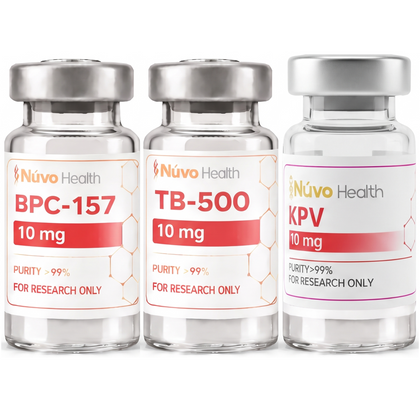
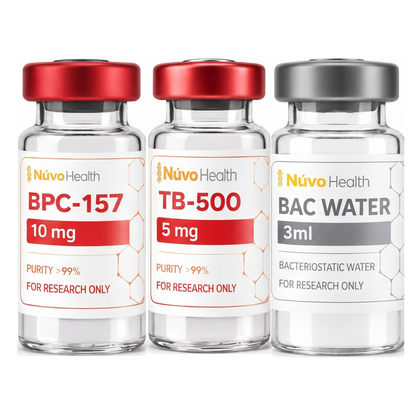
Compounds in this article
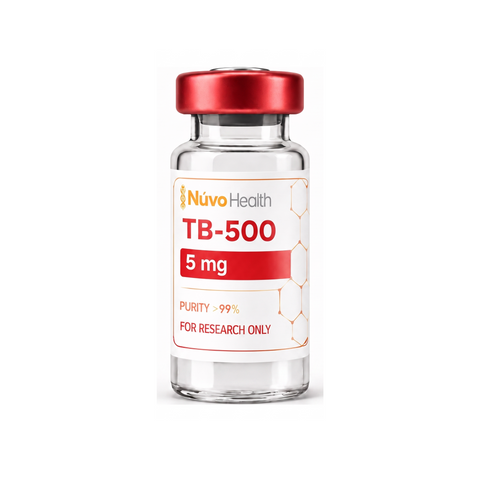
Supplied for laboratory research use only. Not for human or veterinary use.
